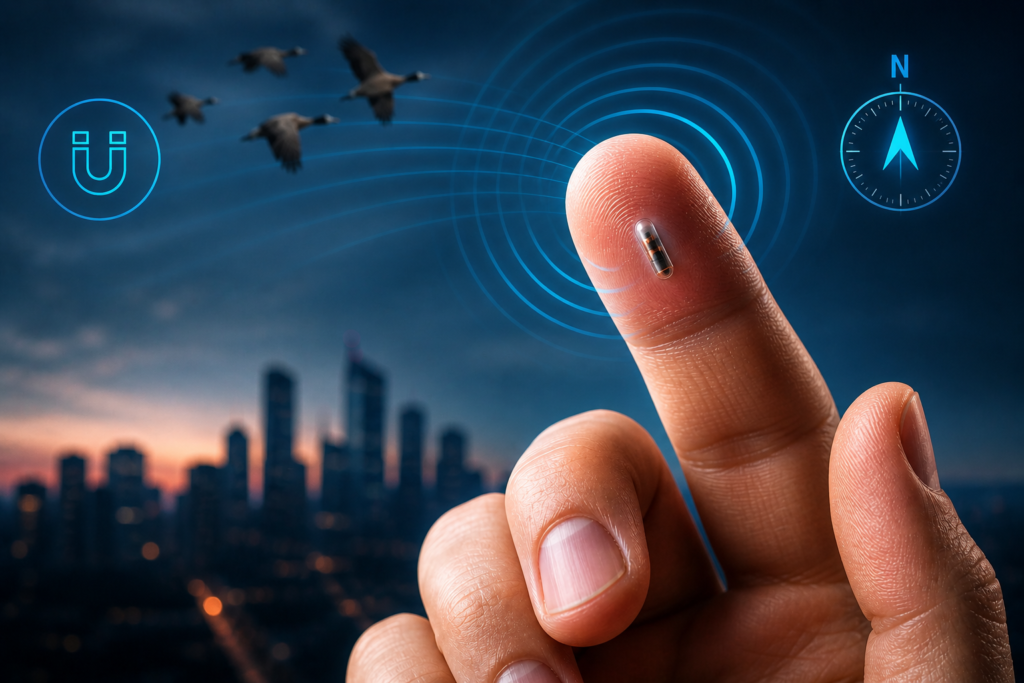
Biohackers are testing a bold idea. Can humans feel magnetic fields like animals do? Early experiments suggest the answer might be yes.
One of the first people to explore this was Kevin Warwick. He tested small magnets placed under the skin. These tiny implants reacted to magnetic fields and created a light vibration in the finger. At first, the feeling was confusing. But over time, the brain started to understand it.
Instead of checking a map or compass, users began to feel direction. It was not visual. It was physical. Some described it as a soft pull or pressure that changed as they moved. This is similar to how birds sense the Earth’s magnetic field during long journeys.
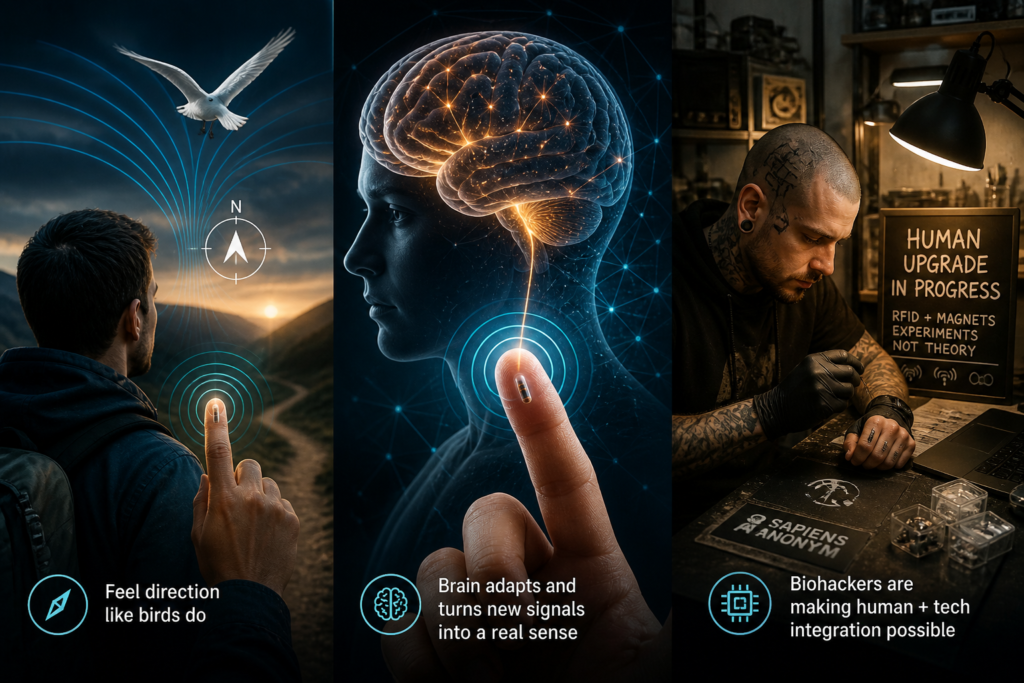
The reason this works is because of neuroplasticity. The brain can change and adapt. When it receives a new signal, it slowly learns what it means. What starts as noise can turn into a useful sense.
Other biohackers also tested this idea. Lepht Anonym used magnets and RFID chips to explore how the human body can work with technology. These tests showed that human and machine integration is not just theory anymore and humans feel magnetic fields.
Projects like NorthSense also support this idea. With time, users stop thinking about direction. It becomes natural, like balance or touch.
This shows a clear shift. Humans may not need tools like compasses in the future. Instead, direction could become a built-in sense.
Can humans feel magnetic fields in the future?
The technology is still new, and there are risks to study. But one thing is clear. Humans are starting to explore new ways to feel and understand the world around them.