
NVIDIA has shared exciting new graphics technology during the Game Developers Conference (GDC) 2026. The company revealed RTX Mega Geometry, a new feature designed to improve ray tracing performance while allowing games to display far more detailed scenes.
RTX Mega Geometry first appeared with the company’s new RTX 50-series graphics cards based on the “Blackwell” architecture. The technology focuses on handling complex geometry in ray-traced scenes more efficiently.
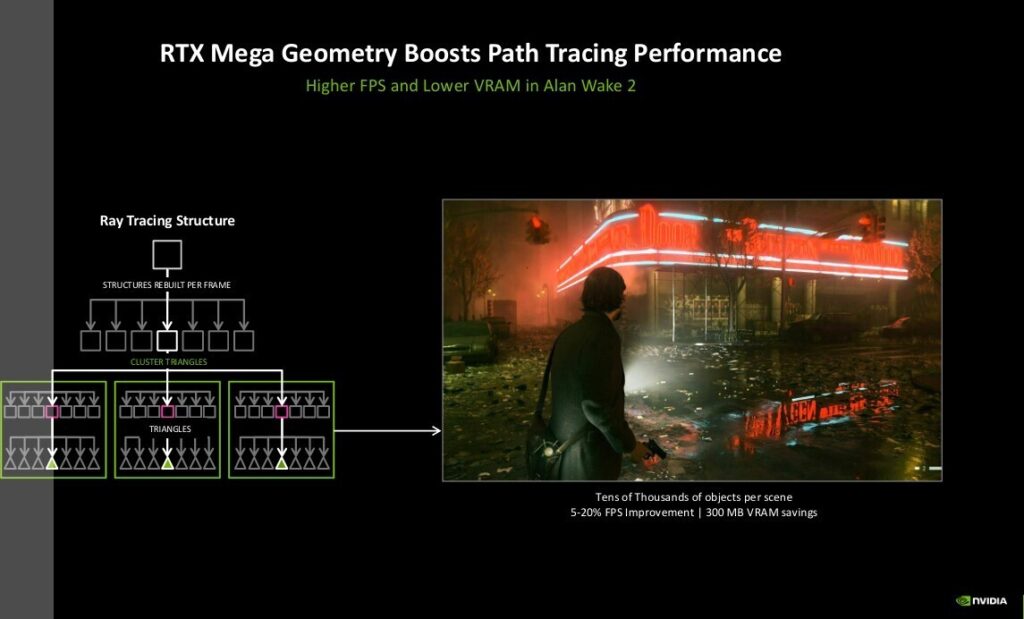
Instead of rendering objects in the usual way, RTX Mega Geometry uses something called nested triangle clusters. This method helps reduce the amount of video memory needed and also lowers the cost of ray intersection calculations inside the GPU. As a result, games can show more detailed objects without hurting performance.
During the presentation, NVIDIA showed a technical example using Alan Wake 2. In this demo, Mega Geometry improved path tracing performance by around 5 to 20 percent compared to normal ray tracing methods. It also reduced video memory use by about 300 MB. The demo scene included tens of thousands of ray-traced objects running at the same time.
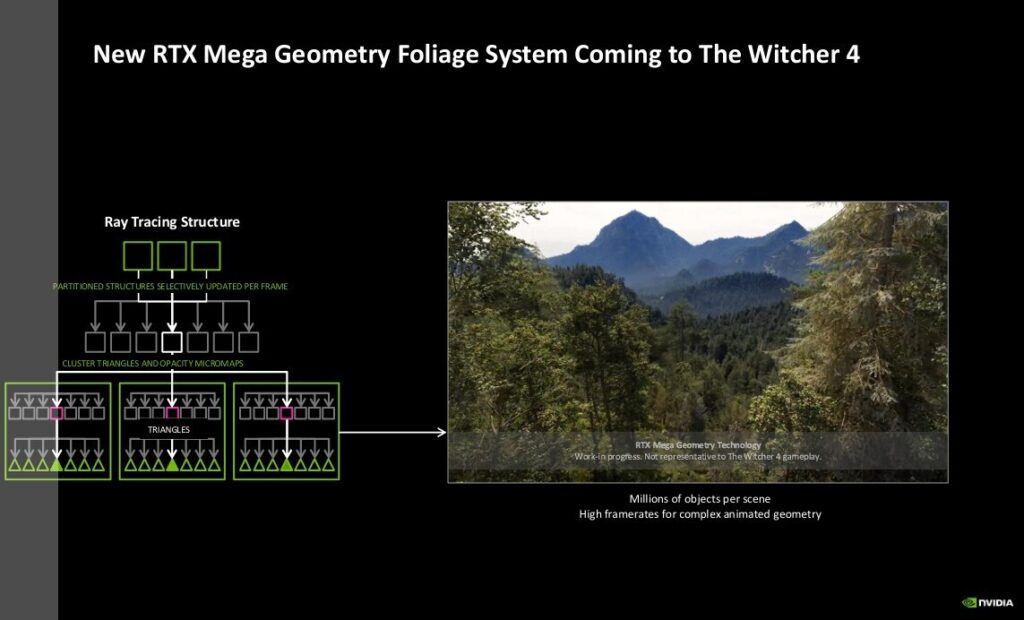
The company also showed a preview demo of The Witcher 4. The demonstration featured a large forest scene filled with thousands of trees and millions of objects. Each tree had its own animation, creating a much more natural environment. The demo also used Opacity Micromaps, a feature first introduced with RTX 40-series GPUs, to handle detailed foliage more efficiently.
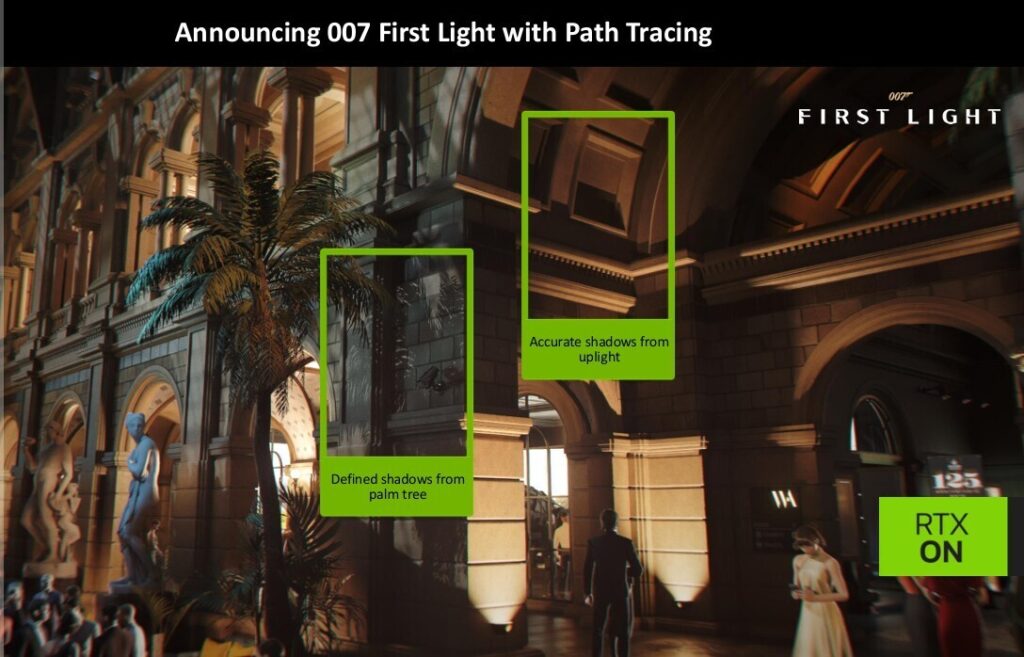
In addition to Mega Geometry, NVIDIA announced that the upcoming 007 First Light will support path tracing. Path tracing is an advanced graphics method that simulates light more accurately, creating more realistic shadows and reflections.
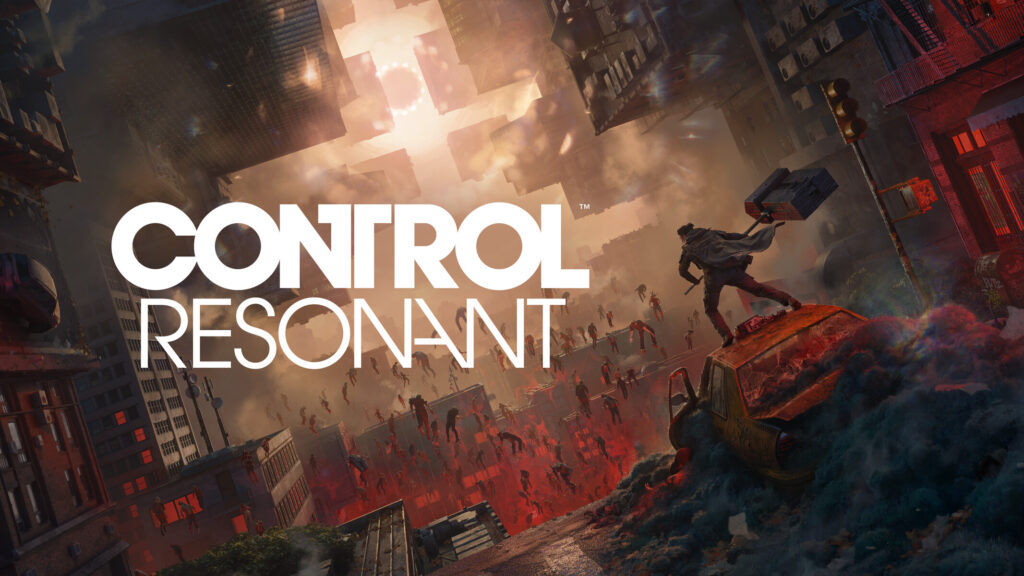
RTX Mega Geometry for Control Resonant
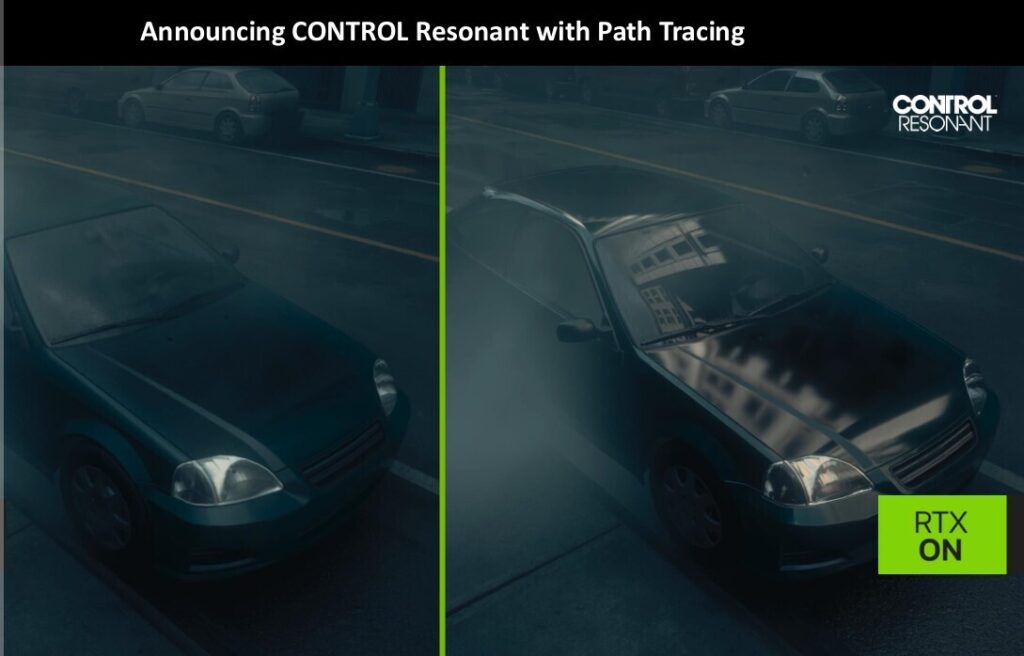
The same technology will also appear in Control Resonant, the upcoming sequel to Control, which was one of the first games to support ray tracing when it launched.
These announcements show how NVIDIA continues to push real-time graphics forward, giving developers new tools to build more detailed and realistic game worlds.