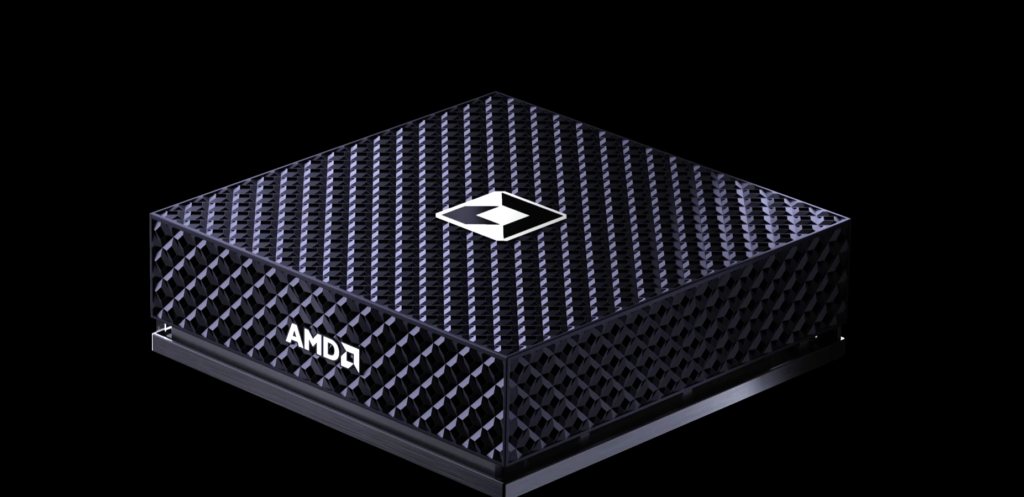
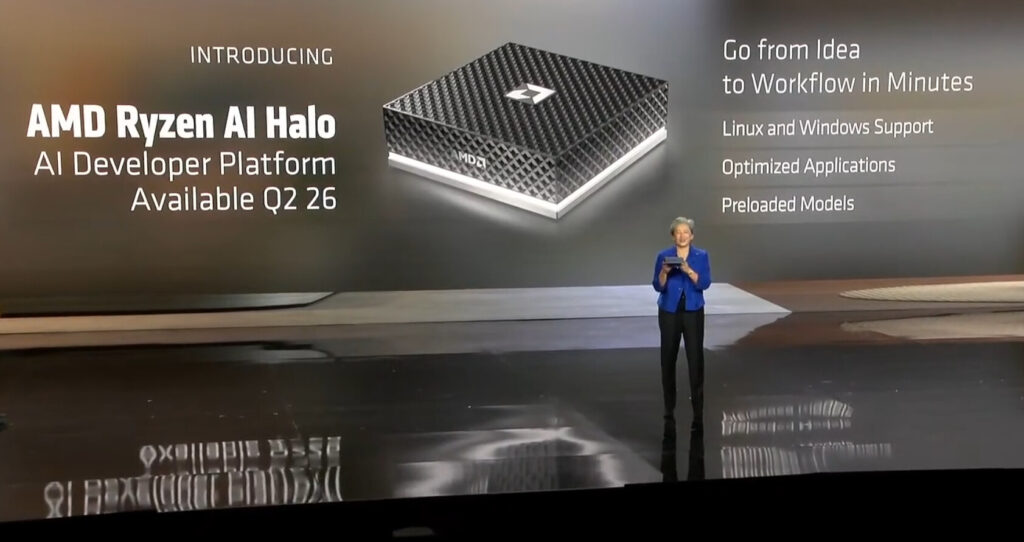
At CES 2026, AMD presented a compact system that signals a clear shift in how local AI development can be done. Called Ryzen AI Halo, this small desktop is not aimed at everyday PC users. Instead, AMD is promoting it as a dedicated AI development platform designed for people building and testing AI software meant for consumer devices.
Rather than focusing on extreme data centre level power, AMD is offering a balanced system that fits on a desk and supports real world AI workflows. The idea is simple. Give developers strong AI hardware without the cost, space, or complexity of large systems.

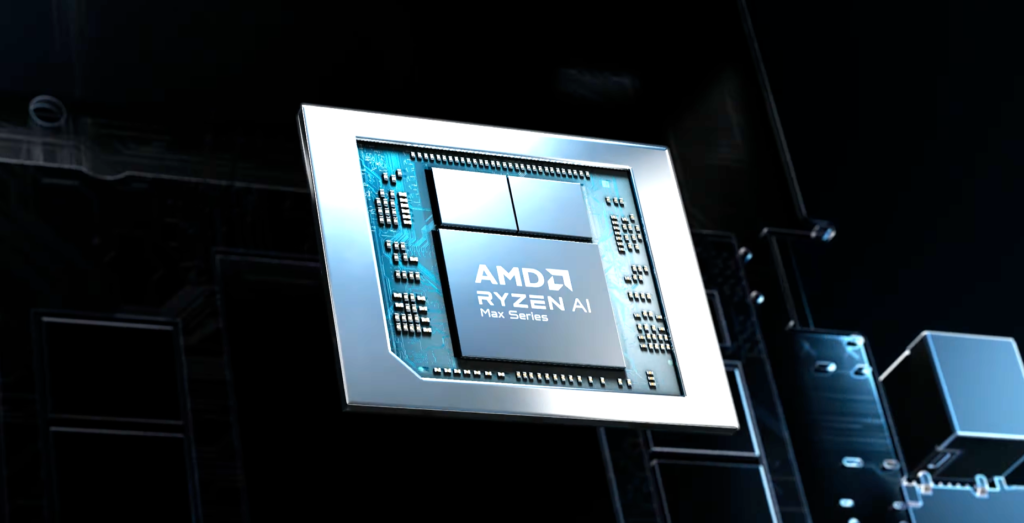
At the centre of Ryzen AI Halo is the Ryzen AI Max 395+, also known as Strix Halo. This processor features 16 cores and 32 threads built on the Zen 5 design. It is paired with a large integrated GPU based on the RDNA 3.5 design, offering 40 compute units. This allows developers to work on graphics heavy and AI driven tasks without relying on a separate graphics card.
AI processing is handled by a built in NPU capable of reaching 50 TOPS. This NPU supports Microsoft Copilot+ features and allows AI workloads to run locally on the system. For developers, this means quicker testing, lower delay, and better control over data when working with AI models.
The system supports 32 GB or 64 GB of LPDDR5X memory, providing enough bandwidth for CPU, GPU, and AI tasks to run together smoothly. Ryzen AI Halo works with both Windows 11 and Linux, making it suitable for different development environments. AMD is also shipping the system with AI models already installed and tuned for this hardware, reducing setup time and allowing developers to get started quickly.
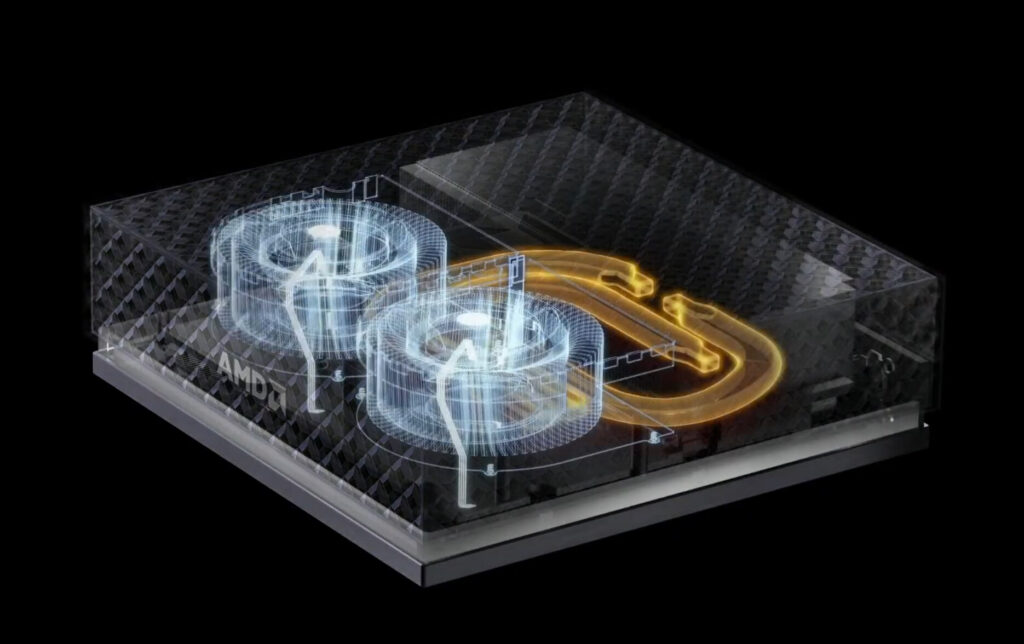
To manage heat in such a small design, AMD created a custom cooling solution. It uses a metal baseplate, flat heatpipes that touch the chip directly, an aluminium channel style heatsink, and two side mounted fans. This design keeps temperatures stable during long workloads while maintaining a compact form.
AMD is positioning Ryzen AI Halo as a local AI development machine, similar in role to NVIDIA’s DGX Spark, but with a focus on consumer AI software rather than large scale computing. It is aimed at developers, researchers, and small teams who want strong AI performance in a practical and easy to manage system.
AMD Ryzen AI Halo availability
AMD plans to release the Ryzen AI Halo AI development platform in Q2 2026. With this product, the company is showing that AI development does not need to be large or complicated. A small, well designed system can deliver serious results.